Office Clearance Tower Hamlets: Recycling and Sustainability
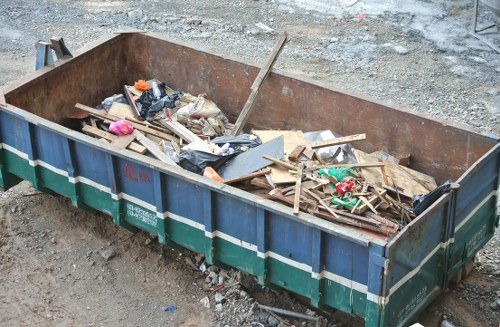
Office Clearance Tower Hamlets delivers an eco-friendly waste disposal area approach tailored for businesses across the borough. Our sustainable rubbish area planning focuses on maximising reuse, minimising landfill and embedding circular-economy practices into every clearance. From multi-storey offices near Canary Wharf to smaller workspaces in Whitechapel, the service prioritises separation at source, careful handling of bulky items and reuse partnerships that keep materials in productive use.
Our strategy aligns with the wider borough ambitions to create a low-waste urban environment. We set a clear recycling percentage target: 70% of all office clearance waste to be recycled or reused within three years. That target is supported by practical measures — dedicated segregation zones during clearances, monitored transfer routes to authorised facilities and recorded diversion rates for each job. The target is ambitious but achievable through consistent separation of paper, cardboard, plastics, metal, glass and recoverable furniture.

To make the sustainable rubbish area real on the ground we use nearby consolidation points and local transfer stations that specialise in commercial waste streams. Where possible items are taken to East London transfer hubs and licensed materials recovery facilities (MRFs) that accept mixed dry recycling and segregated streams, ensuring high-quality recycling outcomes. We also coordinate with consolidation centres that reduce long-haul vehicle movements by combining loads from multiple clearances, creating an optimised, low-impact logistics chain.
Partnerships with charities and reuse organisations are central to our model. We work closely with reputable partners — national and local — who refurbish office furniture, IT equipment and soft furnishings for community reuse. Items that can be repurposed are diverted to charity partners and social enterprises, providing social value while reducing environmental impact. Examples include donation pathways for desks, chairs, shelving and working electronics that would otherwise be sent for processing.
Fleet emissions are tackled with a focus on low-carbon vans and efficient routing. We operate a growing fleet of low-emission vehicles including electric and Euro-6 hybrid vans for urban runs, and use cargo bikes or zero-emission last-mile options where access allows. This reduces local air pollution in the borough while keeping the carbon footprint of each clearance as low as possible. Our transport plan emphasises consolidated collections and off-peak scheduling to minimise idling and improve fuel efficiency.
Measuring progress and maintaining transparency are built into the process. Each clearance generates a simple waste audit report showing weights or volumes diverted to reuse, recycling or disposal. Practical steps implemented on-site include:
- Segregation stations for paper, cardboard, mixed dry recycling and glass.
- Dedicated e-waste handling and secure data destruction pathways for IT equipment.
- Furniture triage to separate reusable items for donation or refurbishment.
These steps align with the borough's approach to waste separation for commercial activities, which typically encourages segregated streams for paper, glass, metal and food/organic material where appropriate. While office clearances rarely generate the same food waste volumes as households, any organic or compostable materials encountered are separated and routed to anaerobic digestion or local composting facilities when available.
Designing an Effective Eco-Friendly Waste Disposal Area
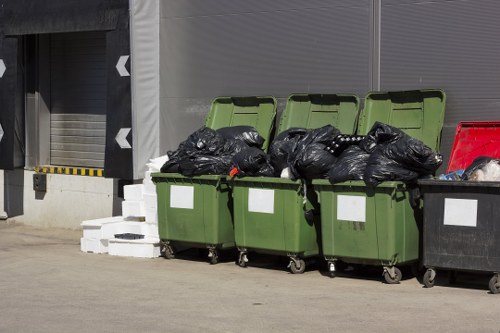
A well-designed sustainable rubbish area on-site makes the difference between modest and outstanding diversion rates. Key elements include clear labelling and visible separation, protected storage for donated furniture pending uplift, and safe containment for any hazardous or WEEE items. We emphasise training for operatives so the segregation happens correctly at source — the single biggest driver of high recycling rates.
Compliance, Local Transfer Stations and Responsible Disposal
All material movements are logged and undertaken in line with environmental regulations. We coordinate with licensed local transfer stations and authorised waste carriers to ensure that WEEE (waste electrical and electronic equipment), hazardous components (such as batteries and fluorescent tubes) and regulated items are handled correctly. Typical diversion routes include reuse via charity partners, material recycling at MRFs, specialist processing for WEEE and secure transfer stations for onward lawful treatment.
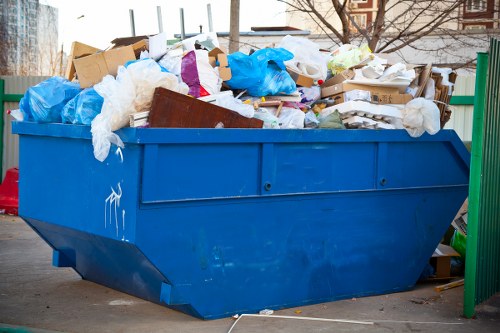
In summary, our approach to eco-friendly office clearance in Tower Hamlets combines an operational commitment to a 70% recycling target, active partnerships with charities and social enterprises, use of low-carbon vans and consolidated routing to local transfer stations, and a practical on-site sustainable rubbish area design. This integrated model minimises environmental impact, supports the local circular economy and ensures that your clearance helps, rather than harms, the local environment. By prioritising reuse and high-quality recycling streams, Office Clearance Tower Hamlets aims to set a standard for responsible, low-carbon waste management across the borough.
