Office Clearance in Tower Hamlets
Our office clearance in Tower Hamlets is arranged for workplaces that need desks, chairs, storage, filing, IT items and general contents removed with care. We focus on practical clearance work for offices that are changing layout, reducing occupied space or preparing for end of tenancy handover. The service can be used for a single room, a floor, a shared suite or a fuller commercial clear-out, with the aim of leaving the space ready for its next stage.
We handle the collection and removal of typical office items and can work around a building’s access limits, lift use and loading arrangements where these matter to the job. If you need a straightforward commercial clearance without unnecessary disruption, we can discuss the items involved and shape the work around what is actually present. For an overview of the wider service, see our office clearance page.
Clearance work is rarely just about taking objects away. In many offices there are mixed items that need separating into reusable furniture, recyclable material and general waste, and there may also be items that require extra caution because of their size or condition. That is why our approach is planned around the contents rather than treated as a one-size-fits-all visit. Useful items, bulky fixtures and loose office clutter can all be assessed as part of the same process, so the customer only needs one organised clearance rather than several separate arrangements.
Desk, furniture and workstation clearance
Office furniture clearance often begins with desks, meeting tables, task chairs, storage cupboards and shelving. We can remove individual pieces or larger groups of furniture where a refit, relocation or contract end requires the area to be emptied. If the office still has usable items in place, those pieces can be separated from broken or unwanted stock so the clearance stays orderly and the room is left easier to reconfigure.
In many workspaces, furniture removal needs a bit more judgement than simple lifting. Larger boards, glass-fronted cabinets and heavy pedestal units may need two-person handling or careful movement through narrow routes. We also take account of whether furniture is fixed together, stacked or partially dismantled, because that affects both the pace of the job and the way the space should be cleared. If you are comparing options, the condition and mix of furniture usually matter more than the room count alone.
Where helpful, you can also review our furniture clearance page for a broader look at furniture removal, or our furniture disposal page when disposal is the key concern. These pages are useful when you want to understand how different furniture items are handled as part of a commercial clearance plan.
Equipment, storage and archive removal

Not every office clearance is dominated by desks and chairs. Many jobs include storage units, archive boxes, shelves, display stands, filing cabinets, screens and mixed equipment that has built up over time. Our service can cover these contents alongside the main clearance, helping to reduce the number of separate removals you need to organise. The work is planned around what is actually on site, so items can be grouped sensibly rather than moved in a rushed or haphazard way.
If papers, files or boxes are still present, they may need to be sorted before removal so that disposal or onward handling is appropriate. Some offices keep long-retained records, some have redundant stock, and some have a mixture of both. We can remove the unwanted material while keeping the overall process focused on the clearance itself. A clear list of what remains can make it easier to judge which items are ready for removal and which need to stay in place.
For customers planning a fuller move or making room for new furniture, this is often the point where a more complete office clearance becomes useful. If the goal is to empty a working area quickly and sensibly, business waste removal may also be relevant alongside the clearance, particularly when the office contains a broader range of non-furniture materials that need collecting.
Clearance for moves, refits and end-of-tenancy work
Office clearance is often needed at the end of a lease, before a refit or when a business is consolidating its space. In those situations, timing matters because the room may need to be returned empty and tidy according to the next stage of the building plan. We can support that process by removing contents in a sensible order, beginning with the items that are no longer needed and working through the remaining fittings and loose materials.
There is usually a balance to strike between speed and care. A refit may require certain items to remain in place until contractors arrive, while a tenancy handover may require the opposite. Because of that, the clearance should be planned around the actual sequence of events rather than treated as a simple empty-and-go task. When a site has multiple rooms or shared access points, a structured approach helps avoid congestion and makes the clearance easier to manage.
If your workspace also includes redundant storage areas, the same approach can be extended to them. Our loft clearance and garage clearance pages show related clearance work for spaces that often contain accumulated items, although the exact setting is different. For office customers, the main point is that the removal plan should match the building and the contents, not just the label on the room.
What our office clearance can include
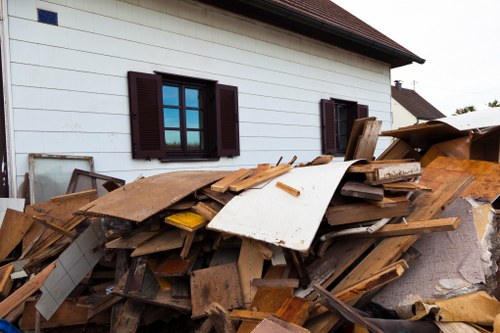
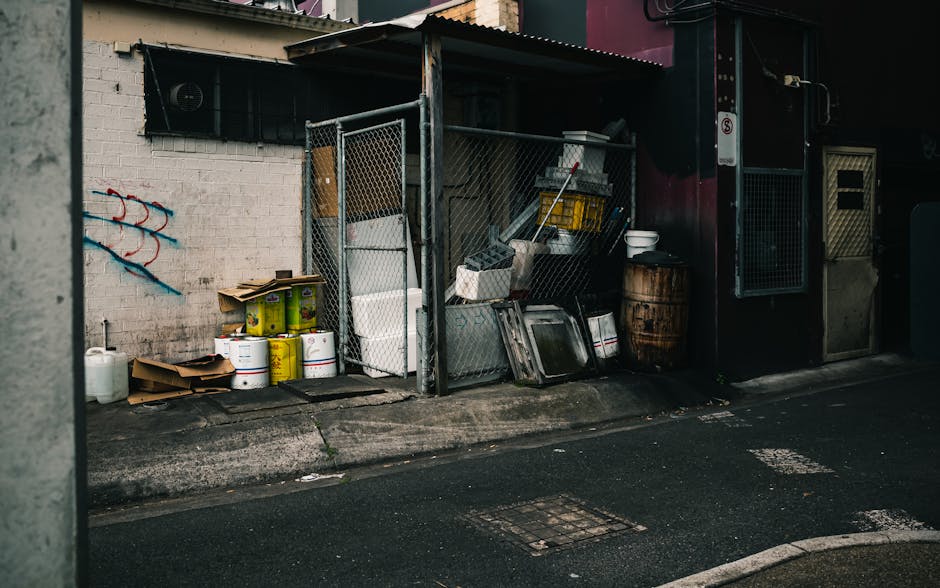
The service can cover a wide range of typical office items, and the exact scope depends on what has been left in the space. Common examples include furniture, loose contents, storage items, office accessories, cardboard, packaging and mixed general clutter. Where relevant, we can also remove items from side rooms, cupboards and back-office storage that are part of the same workplace clear-out.
To help keep the work organised, it is useful to know in advance which categories are present. A simple summary such as the one below can be enough to begin planning:
- desks, chairs and tables
- filing cabinets, shelving and cupboards
- boxes, packaging and general office clutter
- mixed contents from storage rooms or ancillary areas
Some offices need a gradual removal, while others are ready for a single combined clearance. Either way, the service is built around practical decision-making: what needs to go, what can remain temporarily, and which items are best handled as part of the same visit. If the contents are varied, the clearance can still be kept orderly by working through them in a sensible sequence rather than trying to remove everything blindly.
Sorting, access and preparation
Before any clearance takes place, it helps to identify the main item groups and any access issues that could affect movement through the property. Office buildings may have lifts, loading bays, shared corridors or timed entry arrangements, and those details can influence how the job should be organised. A brief description of the space and the items involved is usually enough to begin planning the visit and decide what equipment or handling approach may be needed.
It is also useful to separate anything that must stay from anything that can be removed. That includes retained documents, computers in use, named property and equipment that is being moved elsewhere rather than cleared. Clear labelling can reduce confusion, but the process does not need to become complicated. A short note about where the clearance begins, which rooms are involved and whether items are stacked or fixed in place can make the work more efficient.
For customers comparing service pages, our home clearance page and house clearance page show how larger clearances are organised in domestic settings. They are different from an office job, but they give a useful sense of how contents-based removal can be structured when a space needs to be emptied with care and order.
Recycling, reuse and responsible disposal
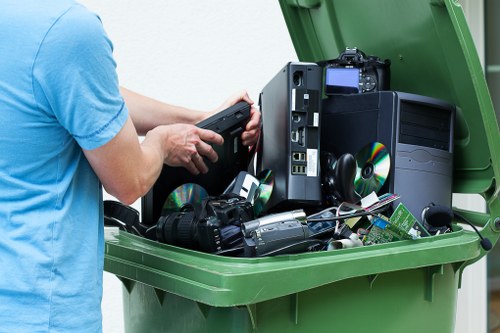
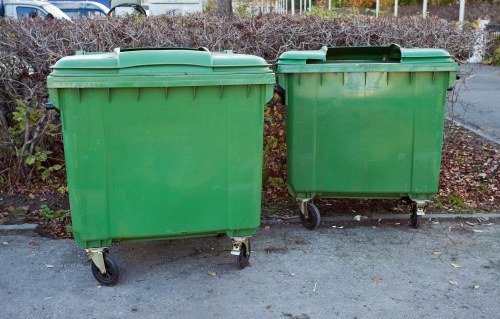
Commercial clearance work often produces a mix of reusable furniture, recyclable material and items that need disposal. We handle that process by separating suitable items where possible and dealing with the remainder through appropriate waste channels. That helps keep the clearance practical while also making sure the removed contents are not treated as one undifferentiated pile. The aim is to manage the load in a way that fits the contents, the building and the customer’s plan for the space.
Responsible disposal is especially relevant when an office contains broken seating, damaged storage, surplus packaging or obsolete contents that cannot simply be moved elsewhere. In those cases, the clearance is not just about removing bulk; it is about choosing the correct route for each item group. If you want to learn more about our broader approach to material handling, see our recycling and sustainability page, which sits alongside the service pages on this site.
Some items can be more awkward than they first appear, particularly when they are heavy, unstable or made from mixed materials. Clearing them carefully reduces the chance of unnecessary damage during removal. It also keeps the clearance easier to review afterwards, because the different item types have been handled in a controlled way instead of being left in a general pile. That matters when a business needs a professional finish rather than a hurried emptying of the room.
About Tower Hamlets
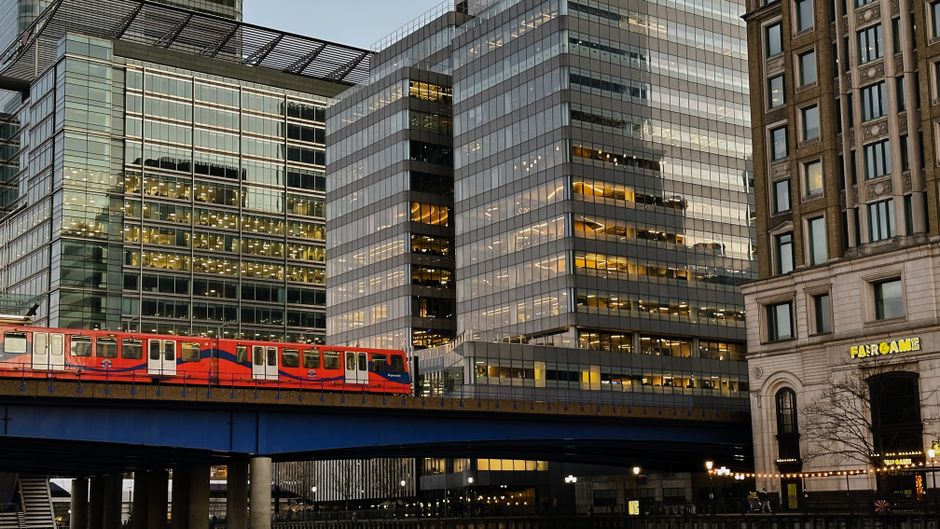
Tower Hamlets is a borough in East London that combines historic districts, dense residential neighbourhoods and major commercial areas within a relatively compact part of the city. Its name refers to the old hamlets that once stood around the Tower of London, and the borough’s identity still reflects that long connection with the Thames, the East End and the city’s growth eastwards. The area includes well-known places such as Whitechapel, Bethnal Green, Stepney, Poplar and the Isle of Dogs, each with its own character and urban grain. The borough has a layered history shaped by docklands, migration, trade and post-war redevelopment, and those influences remain visible in the street pattern, local architecture and cultural institutions. Brick terraces, warehouse conversions, council estates, modern office buildings and riverside towers sit alongside one another, creating a varied built environment rather than a single uniform landscape. The River Thames forms an important southern boundary and has long influenced movement, employment and settlement in the area, while green spaces such as Victoria Park and Mile End Park offer much-needed open ground within a busy urban setting. Tower Hamlets also contains significant landmarks including Spitalfields Market, Brick Lane, the Whitechapel Gallery and Canary Wharf, where the contrast between historic streets and contemporary commercial development is especially clear. Transport links are another defining feature, with Underground, Overground, DLR and bus connections making the borough one of the most closely connected parts of inner London. That mixture of riverfront, markets, housing, offices and cultural venues gives Tower Hamlets a strong sense of place that is rooted in both heritage and constant change.
Quotation details and job planning
Pricing for an office clearance is usually shaped by the amount and type of material, how easy it is to access, and whether the clearance includes bulky or awkward items. A small, tidy room with straightforward access is different from a larger office with multiple floors, restricted lifts or densely packed furniture. Because of that, it is better to look at the actual contents and access conditions than to assume one room size tells the whole story. This keeps the quotation relevant and avoids planning on the wrong basis.
When preparing to request a quotation, it helps to note the rooms involved, the broad item types and any access details that could affect removal. A simple list is usually enough. If you can describe whether the job includes only furniture, furniture plus storage, or a wider mixed clearance, the estimate can be more accurate. If useful, our pricing and quotes page explains the commercial factors that commonly shape a clearance quotation.
Just as important as the quotation is the practical sequence on the day. A well-planned office clearance should allow time for the items that need careful handling, the routes through the building and any objects that must be separated before removal. Send your item list when you are ready and we can help turn it into a workable clearance plan. Request a quotation when you would like to move forward.
Choosing the right clearance approach

Different offices call for different clearance approaches. Some need a complete emptying of furniture and contents, while others only need selected items removed from a working space. The best choice depends on what remains, what must stay and how the building can be accessed. If the office is still in use, the clearance may need to be staged around occupied areas; if it is vacant, the process can often be organised more directly. In both cases, the key is to match the work to the actual site conditions.
It can also help to think about the purpose of the clearance. A business moving out may want the room fully stripped back, whereas a company reorganising its premises may only need surplus equipment and redundant furniture taken away. These are related jobs, but they are not identical. A clear summary of the outcome you want makes it easier to plan the visit sensibly and ensures the clearance focuses on the right items. If you are unsure how to describe the job, plain language is fine; the important thing is to say what needs to go and what needs to remain.
When you are ready to arrange the work, the next step is simple: choose the clearance scope that fits the space and ask for a quotation. If you need a fuller overview of the service again, return to the main office clearance page, or contact us to request a quotation and discuss the items in your Tower Hamlets office.